
What your tongue actually tells us (and what it doesn't)
Supertasters, bitter genes and papillae counts: the real science behind the bit.
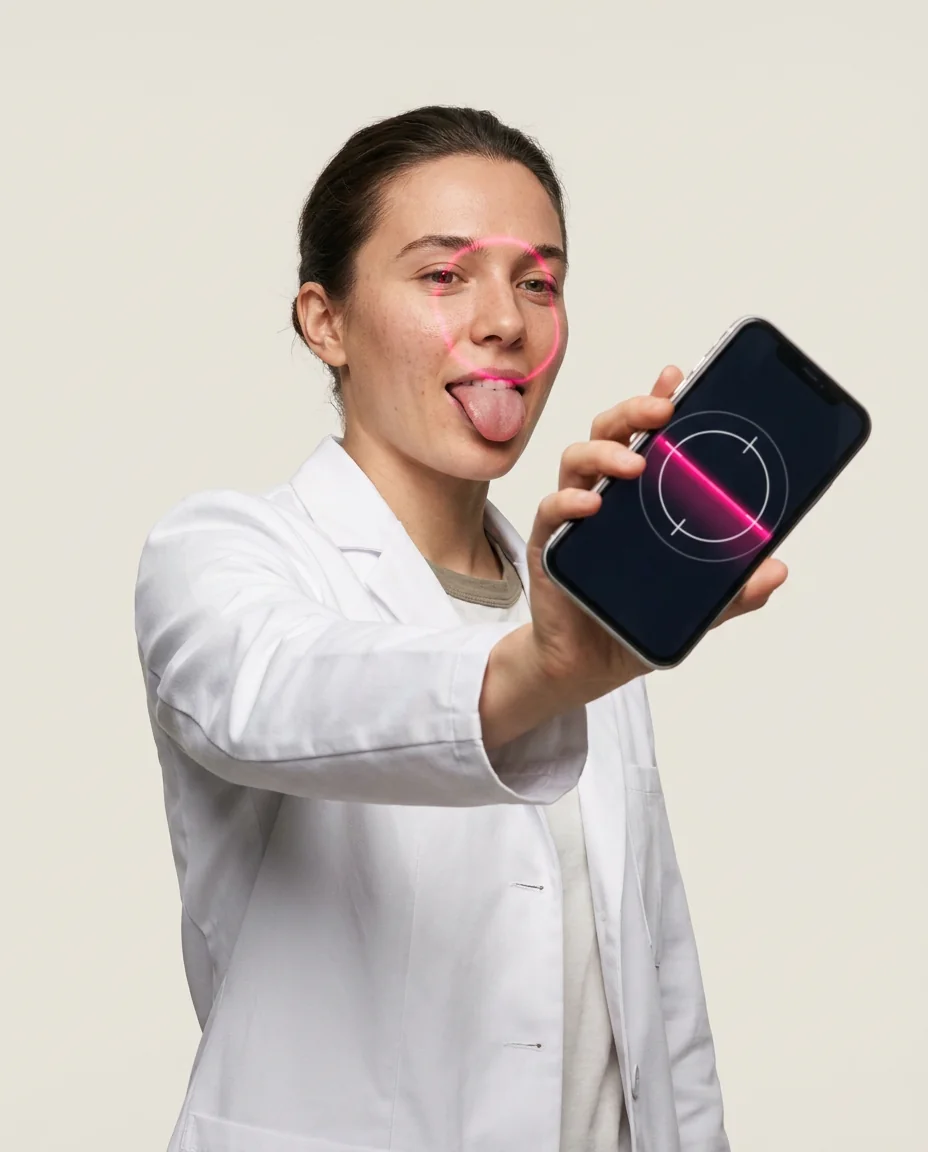
Taste really is personal. Each basic taste has its own receptor cells (Chandrashekar et al., 2006). Variants of a single bitter-receptor gene, TAS2R38, explain most of the difference between people who can and can’t taste the compound PTC (Kim et al., 2003).
Some people are “supertasters”: they find the compound PROP intensely bitter, and early work linked that to having more fungiform papillae, the little bumps on your tongue (Bartoshuk et al., 1994). Later studies showed genes alone don’t explain it (Hayes et al., 2008), and the papillae link is still debated (Fischer et al., 2013).
So what does our scan do?
It reads a photo of your tongue on your device and turns it into a playful six-axis profile. It is not a medical or scientific measurement, and it can’t diagnose anything. The part that is real is what you tell us afterward: textures, sourness, sugar, allergies. Those answers drive your candy matches and shape what we make next.
The full version, with all sixteen references, is in our white paper.